Heat Exchange, from coffee cup to industry! (5 min?)

This topic is related to different processes in our daily lives (like all topics in this blog). For example, in a restaurant when we order hot coffee whenever time passes it start to cool and it’s normal, no?When I think about that the zeroth law of thermodynamics comes to my mind. It is very intuitive, it is not necessary to be a genius to understand it.

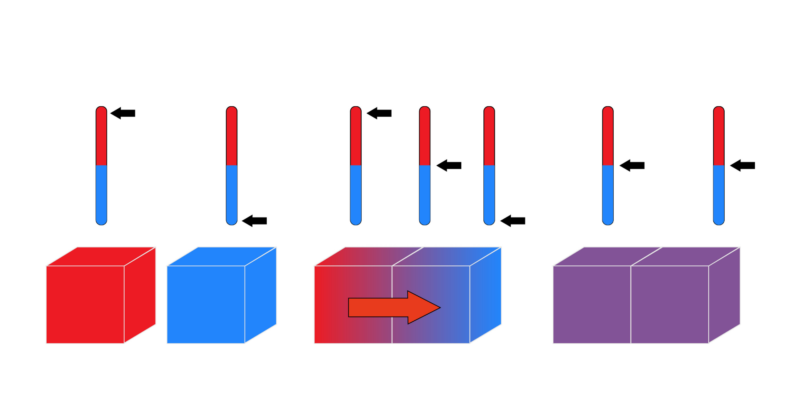
Before, we had talked about thermal equilibrium and the zeroth law of thermodynamics talks about this (Figure 1). The equilibrium says: if we have two objects whit different temperatures and are in contact, it will exist as long as time passes a thermal equilibrium where both objects will be at the same temperature.
Resultado de imagen para equilibrio termico
Figure 1.Thermal equilibrium.

Therefore, the law says: if two systems A and B are separated from each other in thermal equilibrium with a third system called C (next to B but not next to A), then A and C are in thermal equilibrium with each other (Figure 1.5).

Resultado de imagen para zero law of thermodynamics
Figure 1.5 Zeroth law of thermodynamics.

In the case of the coffee cup (Figure 2), the air is the other element in heat transfer. It’s impossible for the atmosphere to increase its temperature, normally the coffee decreases its temperature equal to the atmosphere (equilibrium). Why? First I want to announce two things:
1.- Everyone in this world works with physics and chymics, I mean the temperature is associated with the kinetic energy of particles (atoms, molecules…) in the system, in termodinamics it is called internal energy.
2.- There are different forms of heat transfer such as diffusion, convection and radiation.
It’s important to know that they exist, even if you don’t understand it don’t worry, later I will tell you.

Resultado de imagen para heat transfer in a coffee cup
Figure 2. Different forms of heat transfer in a coffee cup.

Now, let’s talk about different equations that describe heat transfer. When we heat a substance, we can observe that the temperature increases, this is because the first system (for example a flame) transports heat continously to second system (like air in atmosphere with less temperature), this heat flow (Q, Cal) represents the amount of energy in the form of heat that is transferred over an area (q, Cal/m^2). Intuitively, It could be assumed that a constant heat flow (first system) increases the temperature of another second system over time, but this will be conditioned by the temperature by the both system. But if the heat flow (first system) is not constant like a cup of coffee in a restaurant, then the second system (air in atmosphere) will cool the first system. Experimently, Newton found the following:

Figure 3. Heat flux and its proportionality.

First, this only works between solids and fluids, when Newton discovered this phenomenon he only experimented with these states of matter. Second, Newton only thought of a small hot system with Ts in contact with a large cold system with Tf like a cup of coffee in the outdoor environment (and yes, the amount of mass is important). Third, Newton understood that this exchange was different for each substance, so he introduced a constant called heat exchange coefficient “h” (Figure 4).

Newton to remove that proportion with “h”:
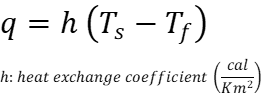
Figure 4. Newton’s Law of Cooling.

“h” depends on each fluid and contact area, it represents heat transfer by convection. Rearranging:
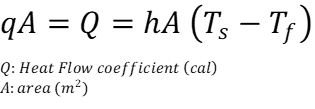
At the same time, analogously to the previous example we can deduce its dependence on time.

Figure 5. Heat Flow on time.

The question now is how. Always when one system loses heat another system gains it, this is a heat balance, and in theory they will be equal. In termodinamics this is relationed whit the entalpy, but for this moment just you belive me whit the following:
1) If the temperature Ts of the system is higher than the ambient temperature Tf, the body loses an amount of heat dQ. From the energy balance we know that the heat flow depends proportionally on mass, temperature and specific heat capacity. Finally, specific heat capacity is the ability of a body to store heat. Don’t worry, in the second chapter we will go deeper into this topic about energy balance and enthalpy.
2) This expression refers specifically to Newton’s law of cooling.
3) With this equation, you can show an approximation of how long it takes for your coffee cup to cool.
* To remember: this equation is for convection transport and have important assumptions to use.
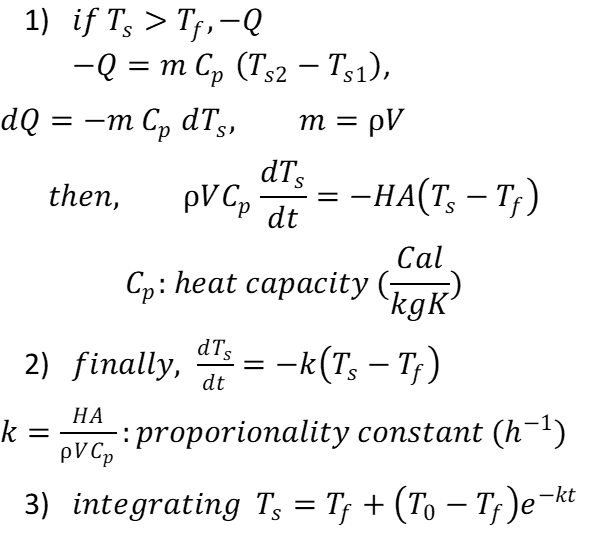
I know that this last part was very fast, but the important thing is to understand that this type of phenomenon is not difficult to model. In the next chapter on this topic, I will explain how to use the last equation and show you other equations and their application in the industry, more specifically in heat exchange (process equipment in the chemical industry).

See you soon!!! Thank you 🙂

Entropy

We all have heard sometimes about this rare concept of entropy, its understanding and interpretation cause confusion even among graduates and scientists. Today we will try to explain what entropy is and present a relation to our daily lives. Let´s begin.E

Entropy is a concept introduced within the field of thermodynamics. We must state that classical thermodynamics describes a system (a portion of the universe that is isolated for its study) in terms of macroscopic variables such as volume, temperature, pressure and surprisingly entropy as well. Entropy may not be seen as easily as volume or pressure though.

The idea of irreversibility is key to understand entropy. We have certain notions of what reversible and irreversible processes are. For example if you pour cream into a cup of coffee you would see an irreversible process because the cream would never came out of the coffee. If you move a chair from one place to another you could think of a reversible process because you can just simply put the chair in its original place.

The truth is that in reality all processes are irreversible and the processes we see as reversible have a very small amount of entropy change. Entropy is an extensive property of a system, we can approach it by thinking of it as an amount of energy disorder and/or energy degradation. In the previous examples the energy of the systems is always being dispersed.

In classical thermodynamics we can only calculate entropy change (ΔS) of a system. To a system containing a sub-system which undergoes heat transfer to its surroundings (inside the system of interest). It is based on the macroscopic relationship between heat flow into the sub-system and the temperature at which it occurs summed over the boundary of that sub-system.

Following the formalism of Clausius, the first calculation can be mathematically stated as:

Where δS is the increase or decrease in entropy, δq is the heat added to the system or subtracted from it, and T is temperature. The equal sign indicates that the change is reversible, because Clausius shows a proportional relationship between entropy and the energy flow, in a system, the heat energy can be transformed into work, and work can be transformed into heat through a cyclical process. If the temperature is allowed to vary, the equation must be integrated over the temperature path.

The second law of thermodynamics states: for an irreversible process in an isolated system (a system not subject to outside influence), the thermodynamic state variable known as entropy is never decreasing. Therefore if we think of the universe as an isolated system, the entropy will always rise.

In the upcoming notes we will discuss another interesting approach to explain entropy, which is the microscopic approach and the third law of thermodynamics.

What is a chemical reaction?

Chemical reactions are everywhere in our daily lives, the combustion that takes place in our car engines, the rusting of iron, all the biochemical reactions that are taking place within our bodies like digestion and many more. But what would be a formal definition of a chemical reaction? If you asked a chemist what would be his/her answer? We will try to explain it in an easy way.

First, we need to know that all the substances we see around us are composed of different kinds of atoms. Atoms are the smallest constituents of matter that behold the properties of a specific chemical element.

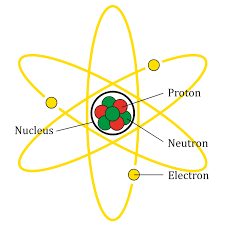
An atom is composed of a nucleus and one or more electrons bound to the nucleus. The nucleus is made of protons and neutrons. Protons and electrons possess positive and negative charge respectively while neutrons possess no charge. The electrons orbitate the atom´s nucleus because they are attracted to the protons by an electromagnetic force, you can think about it as a small scale solar system.

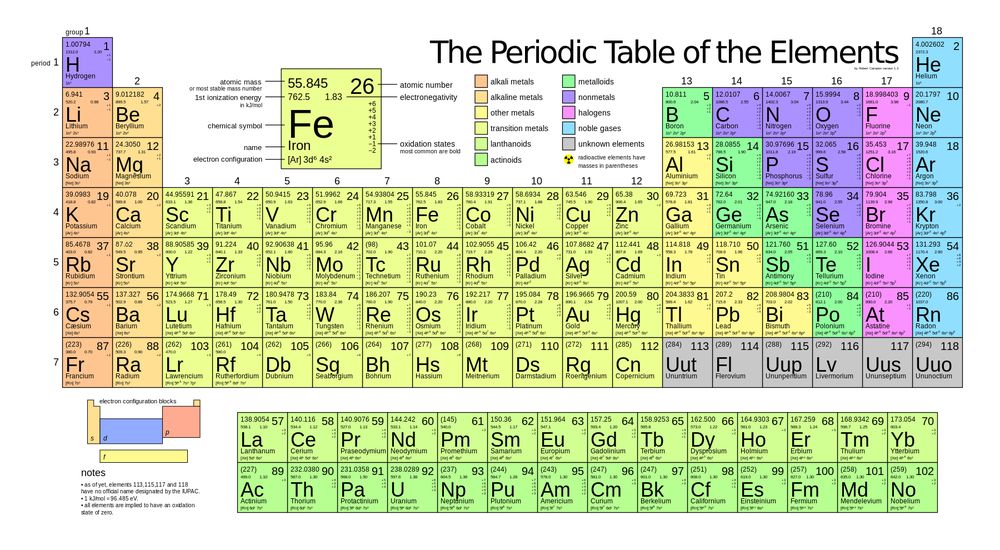
Also the number of protons in the nucleus defines to what chemical element the atom belongs. For example all carbon atoms contain 6 protons.

Additionally another important aspect we need to discus in order to understand what a chemical reaction is, is the concept of chemical bond. A chemical bond ultimately is an arrangement between electrons of different atoms. In order to picture this we can take a look to the next image based on the Lewis model:

Here we can appreciate the specific configuration of electrons in different elements and molecules,

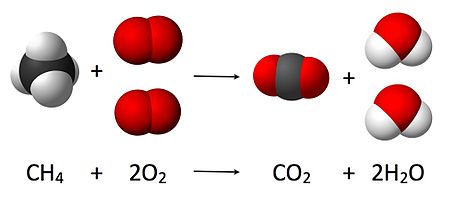
With this said we can define a chemical reaction as the process in which the configuration of the electrons change and chemical bonds are broken and formed.  This process can be described by a chemical equation.

As simple as that.

Now that you know what a chemical reaction is think about what we have discuss in the post: “the chemical potential of our lives”. Try to imagine the chemical potential as a driving force that causes a chemical reactions to occur and go deeper about this.

Thanks

Ðiviπe 𝝅µ𝒎𝟑𝒆𝒓 (Divine number)

  1. What is?
Figure 1.

2. How did it appear?

Figure 2.

Two numbers “a” and “b” are in aurea ratio if it complies with this:

( a+b ) / a = a / b 

If φ=a/b so the equation is:

1 + φ^(-1) = φ

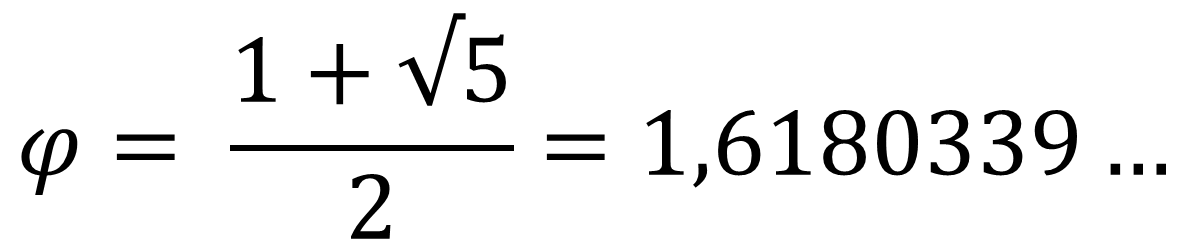
The solution of the last equation is shown in figure 1.

3. Where does it appear?

  • Fibonacci’s succession

1 + 0 = 1 ——————— 1 / 1 = 1
1 + 1 = 2 ——————— 2 / 1 = 2
1 + 2 = 3 ——————— 3 / 2 = 1.50
2 + 3 = 5 That is magic -> 5 / 3 = 1.67
3 + 5 = 8 ——————— 8 / 5 = 1.60
.. + .. = .. ——————— .. / .. = ..
34 + 55 = 89 ——————— 89 / 55 = 1.6182

If we go to infinity, the result to divide the fibonacci number with the previous one is 1.6180339 … as in figure 1.

The fibonacci’s succesion appear in the rabbit burrow.

  • Da Vinci used this number to draw “vitruvian man”.
  • Pedigree of the Drone
  • Nautilus shell
  • Ordination system

4. Conclusion

Finally, some experts postulate that the Phi number is to the organic growth what Pi is to the measurement of the circle: the number on which all the calculations and phenomena are based.

The pressure

I think this topic is some easy. Since we were kids at school they taught us some notions about pressure. Today I will talk about a known mathematical
equation that will help us to understand better these expressions, at the same time, to learn about the pressure in its maximum simple splendor.

When the applied force is normal and uniform distributed over a surface, we can speak of a pressure that relates a force acting on the surface.

Resultado de imagen para P=F/A

Force normal “F” over a surface “A”.

Its simple mathematical expression indicates two relations one proportional and another inversely proportional. You must look at the image below (equation) for the next. First, the pressure is proportional to the force, that is, if the force increases, the pressure will also increase. Second, the pressure is inversely proportional to the area, in this case if the area decreases, the pressure will increase.

Resultado de imagen para P=F/A

Thanks to the above we can now understand some phenomena about pressure. For example, have you ever seen winter snow boots? If you know it, you will understand why winter boots are bigger than normal. This is because our weight represents the force caused by gravity, and the surface where we stand is the area. As the area is inversely proportional to the pressure, while the area increases the pressure decreases that means we do not sink in the snow. Sometimes people use a racket in their boots to increase the area.

Resultado de imagen para botas con raqueta para caminar en la nieve

Why does not a blow go through our skin? Why does a needle do it? The answer is in the area. The force is important but in this case the area predominates because in a needle it is smaller than a fist, therefore the pressure is greater and the needle manages to pierce the skin.

Easy, right?

Part 1. The “Chemical potential” of our lives.

Unlike the Schrödinger equation, this topic is often very complex to explain. At least there is not something like a cat in a box. I don’t say that the quantum is more easy, of course it isn’t. Let’s start.

Although there are more, we can easily identify three states of matter: solid, liquid and gaseous. These phases may be in some kind of equilibrium between them, for example, liquid water with water vapor (note that we speak of the same substance) for dynamic equilibrium [equal pressures] or a coffee and the container where it is found as a thermal equilibrium (equal temperatures). To comply with the above, the system that is spoken shouldn’t suffer any spontaneous change when it is subject to the conditions of its environment, of course, if you alter some equilibrium system, one of the phases tends to predominate.

Thermal equilibrium is very intuitive, I’m sure you imagine it. The dynamic balance is a bit intuitive, however, it isn’t that complicated. In a container where water and air coexist there is this kind of equilibrium. The water will begin to evaporate until it saturates the air, the molecules of vapor in the air will start to impact the water’s surface and will begin to condesate and return to it’s liquid form, while the water will begin to saturate the air for these portion that it was condensate. Yes, it’s a pretty cicle.

Imagen relacionada

It must be taken into account that evaporation exists without the need to boil the liquid. Have you ever wondered why a puddle evaporates completely without the need for us to live at a temperature of 100 ° C (boiling water temperature) in the environment? Part of the answer is in the last paragraph, we also add the energy input of the heat provided by the sun or as the flame of our stoves when we cook, and do not forget the air currents present in the atmosphere.

All the above will help us to better understand the following. Ok, now the chemical potential makes its appearance. Idealize the change of energy caused by the change in the amount of matter where the volume of the system does not change, whether or not it is in a mixture. Yes, I know, maybe I don’t explain it very well. The chemical potential is the tendency of any substance to escape from one phase to another regardless of whether it is the same phase, as in the following image.

http://kentsimmons.uwinnipeg.ca/cm1504/Image128.gif

In the next chapter we will discuss more about the chemical potential and thus understand why it is important to know.

Application of the Schrödinger’s equation (in 5 minutes?)

  1. A cat in a box.

This subject is very complex and at the same time something simple. If you are a person oblivious to science like physics or chemical this can be weird and strange. Don’t worry, I just suggest you to avoid all mathematical equation of this blog.

Who hasn’t heard of the Schrödinger’s cat? I always listen to people talk about a cat in a box. Maybe this isn’t new for you, but you really can say me what is the meaning for that?

Ok, let’s start. First, Schrödinger was an Austrian physicist. He made a famous equation in 1925, possibly the most important one for quantum physics.

Resultado de imagen para ecuacion de schrodinger
Schrödinger’s equation

Shrödinger invented an analogy with his equation and a cat in a box, because his equation tries to find the probability of seeing an electron in a place in space. At the same way that in his analogy we can find a cat alive or dead inside a box. So, what is the interesting? In fact, probability is the key. Shrödinger said that as long as you didn’t open the box, you wouldn’t know if the cat was alive or dead and in moment you open the box, you can know. In general, this equation tells us that we will never know the location of the particle just a probability of where it might be.

Resultado de imagen para superposicion cuantica
Pretty cat

Now, this part is something hard. Do you know that electrons have a property of being able to stay in 2 places at the same time? Yes, I know. Now you understand better, do not? The cat be able to stay alive or dead. This phenomenon is called superposition.

Resultado de imagen para funcion de onda
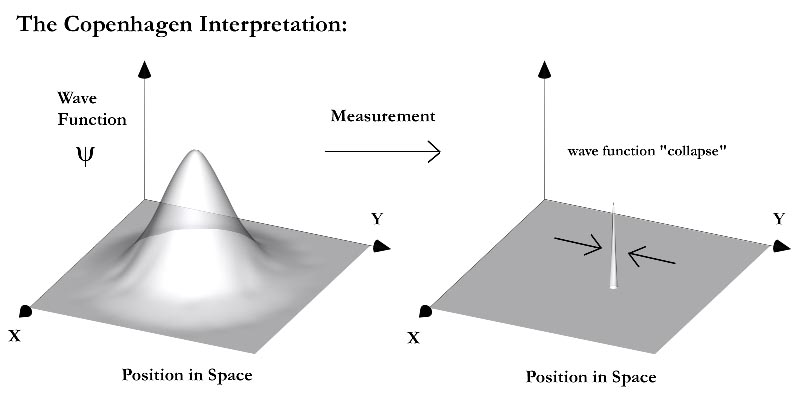
This is a beautiful graphical interpretation of the equation. When we do not know the position of the electron in space, we have probability. When we measure the position we disturb the environment and we can see its position. It’s like speaking with any girl about a relationship, if you do not tell her you love her you will never know the answer about that.

The next episode I will talk about Schrödinger’s equation more specifically its application for describing stationary waves (atomic orbitals) for a combination of the numbers quantum of hydrogen. [Only recommended for people with mathematical knowledge]

what is catalysis? In 5 minutes

1.Background

The oldest documented catalyst reaction and promovide by man is fermentation of wine (5000 years BC). It’s a reaction of enzimatic catalysis, in wich an enzyma convert selectivaly the sugars in alcohol.

4000 BC: For example, Egyptians discovered a way to horn bread with barm (beer yeast).

Generally enzymes are proteins, the mechanism of functioning is complex, but it can be simplified with the model “key-lock” that Fischer raised in the 19th century.

Resultado de imagen para model by fisher enzimatic
Model “key-lock” by Fischer

The enzyme has “to recognize” the appropiate substrat. If this doesn’t fit in active site, reaction doesn’t not occur or occurs much less effectively. Once the reaction has produced, the door will open and will leave out the products.

In 1812, Thernard observed the spontaneous decomposition of oxygenated water (hydrogen peroxide) by adding metallic powders. In 1817, Sir Humphry Davy reported that a platinum wire in contact with alcohol became incandescent, while simultaneously acetic acid appeared. In 1825, Fumiseri suggested that there should be a possible union between the chemical reaction and adsorption, where the surface is the most important. In 1836, Berzelius introduced the term catalysis.

And so, what is catalysis? According to Berzelius : Different substances simples or compounds, solubles or insolubles, they have the property to exercise over other substances an effect more different to the chemical affinity. Through this effect they produce decomposition in the elements of those substances and different recombinations of those elements, of which they remain separate.

But if you want to know more about catalysis, wait for the next chapter where we will give you more details concerning modern catalysis and their applications.